
5S is a system to reduce waste and optimize productivity through maintaining an orderly workplace and using visual cues to achieve more consistent operational results. Implementation of this method “cleans up” and organizes the workplace basically in its existing configuration, and it is typically the first lean method which organizations implement.
The 5S pillars, Sort (Seiri), Set in Order (Seiton), Shine (Seiso), Standardize (Seiketsu), and Sustain (Shitsuke), provide a methodology for organizing, cleaning, developing, and sustaining a productive work environment. In the daily work of a company, routines that maintain organization and orderliness are essential to a smooth and efficient flow of activities. This lean method encourages workers to improve their working conditions and helps them to learn to reduce waste, unplanned downtime, and in-process inventory.
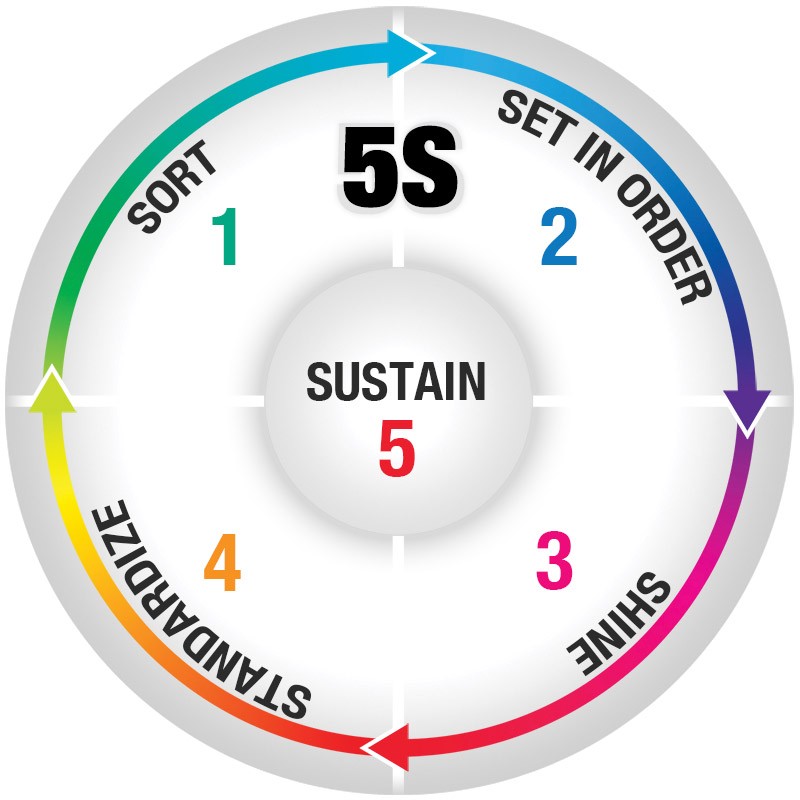
The 5S system is a good starting point for all improvement efforts aiming to drive out waste from the manufacturing process, and ultimately improve a company’s bottom line by improving products and services, and lowering costs. Many companies are seeking to making operations more efficient, and the concept is especially attractive to older manufacturing facilities looking to improve the bottom line by reducing their costs.
“A place for everything, and everything in its place” is the mantra of the 5S method, and storage and workspace systems such as those provided by Lista International allow improved organization and maximum use of cubic space for the highest density storage. The result is an improved manufacturing process and the lowest overall cost for goods produced.
The 5S Pillars
Sort. Sort, the first S, focuses on eliminating unnecessary items from the workplace that are not needed for current production operations. An effective visual method to identify these unneeded items is called “red tagging”, which involves evaluating the necessity of each item in a work area and dealing with it appropriately. A red tag is placed on all items that are not important for operations or that are not in the proper location or quantity. Once the red tag items are identified, these items are then moved to a central holding area for subsequent disposal, recycling, or reassignment. Organizations often find that sorting enables them to reclaim valuable floor space and eliminate such things as broken tools, scrap, and excess raw material.
Set In Order. Set In Order focuses on creating efficient and effective storage methods to arrange items so that they are easy to use and to label them so that they are easy to find and put away. Set in Order can only be implemented once the first pillar, Sort, has cleared the work area of unneeded items. Strategies for effective Set In Order include painting floors, affixing labels and placards to designate proper storage locations and methods, outlining work areas and locations, and installing modular shelving and cabinets.
Shine. Once the clutter that has been clogging the work areas is eliminated and remaining items are organized, the next step is to thoroughly clean the work area. Daily follow-up cleaning is necessary to sustain this improvement. Working in a clean environment enables workers to notice malfunctions in equipment such as leaks, vibrations, breakages, and misalignments. These changes, if left unattended, could lead to equipment failure and loss of production. Organizations often establish Shine targets, assignments, methods, and tools before beginning the shine pillar.
Standardize. Once the first three 5S’s have been implemented, the next pillar is to standardize the best practices in the work area. Standardize, the method to maintain the first three pillars, creates a consistent approach with which tasks and procedures are done. The three steps in this process are assigning 5S (Sort, Set in Order, Shine) job responsibilities, integrating 5S duties into regular work duties, and checking on the maintenance of 5S. Some of the tools used in standardizing the 5S procedures are: job cycle charts, visual cues (e.g., signs, placards, display scoreboards), scheduling of “five-minute” 5S periods, and check lists. The second part of Standardize is prevention – preventing accumulation of unneeded items, preventing procedures from breaking down, and preventing equipment and materials from getting dirty.
Sustain. Sustain, making a habit of properly maintaining correct procedures, is often the most difficult S to implement and achieve. Changing entrenched behaviors can be difficult, and the tendency is often to return to the status quo and the comfort zone of the “old way” of doing things. Sustain focuses on defining a new status quo and standard of work place organization. Without the Sustain pillar the achievements of the other pillars will not last long. Tools for sustaining 5S include signs and posters, newsletters, pocket manuals, team and management check-ins, performance reviews, and department tours. Organizations typically seek to reinforce 5S messages in multiple formats until it becomes “the way things are done.”
Table below provides an overview of the 5 pillars, with a brief definition of why it’s important, and the list of problems it avoids if implemented.
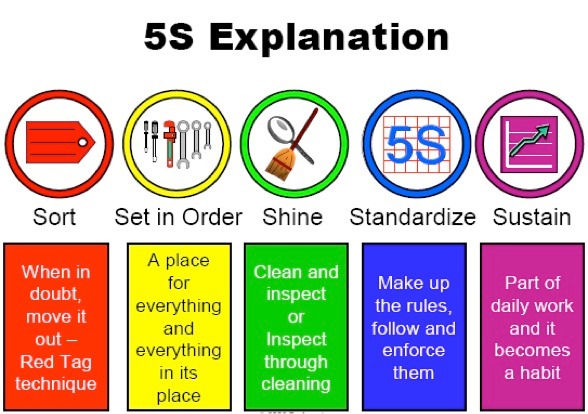
Benefits to the company from using the 5S methodology include raising quality, lowering costs, promoting safety, building customer confidence, increasing factory up-time, and lowering repair costs.
Therefore, 5S relates to workplace organization and forms a solid foundation upon which many organizations base their drive for continuous improvement. It is equally applicable & successful in all sectors helping to achieve high impact results.
It is a systematic and methodical approach allowing teams to organize their workplace in the safest and most efficient manner.